
If you sell on Amazon FBA, prep just became your responsibility, whether you’re ready for it or not. As of January 1, 2026, Amazon officially ended its own in-house FBA prep and labeling services in the US. Sellers now have to arrive at Amazon’s fulfillment centers fully prepped and labeled themselves, or work with a third-party amazon fba prep service to handle it for them.
This guide covers what FBA prep actually involves, what Amazon requires, what it costs, and how to choose a provider, whether you’re shipping 500 units a month or 50,000.
Why FBA Prep Matters More Than Ever
Amazon’s reasoning for ending its own prep services was straightforward: most sellers already handle packaging and labeling themselves, through their manufacturer, or through a third-party provider, so Amazon decided to step back and let fulfillment centers focus on moving product faster.
The catch: Amazon isn’t easing into this. Every unit that arrives at a fulfillment center has to be correctly prepped and labeled on the first try. Improperly prepped shipments get rejected and returned at the seller’s expense, or disposed of entirely, with no reimbursement and no option to pay Amazon to fix it after the fact.
That means an amazon fba prep company isn’t optional anymore for most sellers, it’s either that or building the capability in-house.
What Is FBA Prep?
FBA prep is the process of getting your inventory ready to meet Amazon’s requirements before it’s accepted into a fulfillment center. Once your inventory is properly prepped and in the FBA program, Amazon handles picking, packing, shipping, and customer service for orders. Getting your product to that point correctly is where a prep provider comes in.
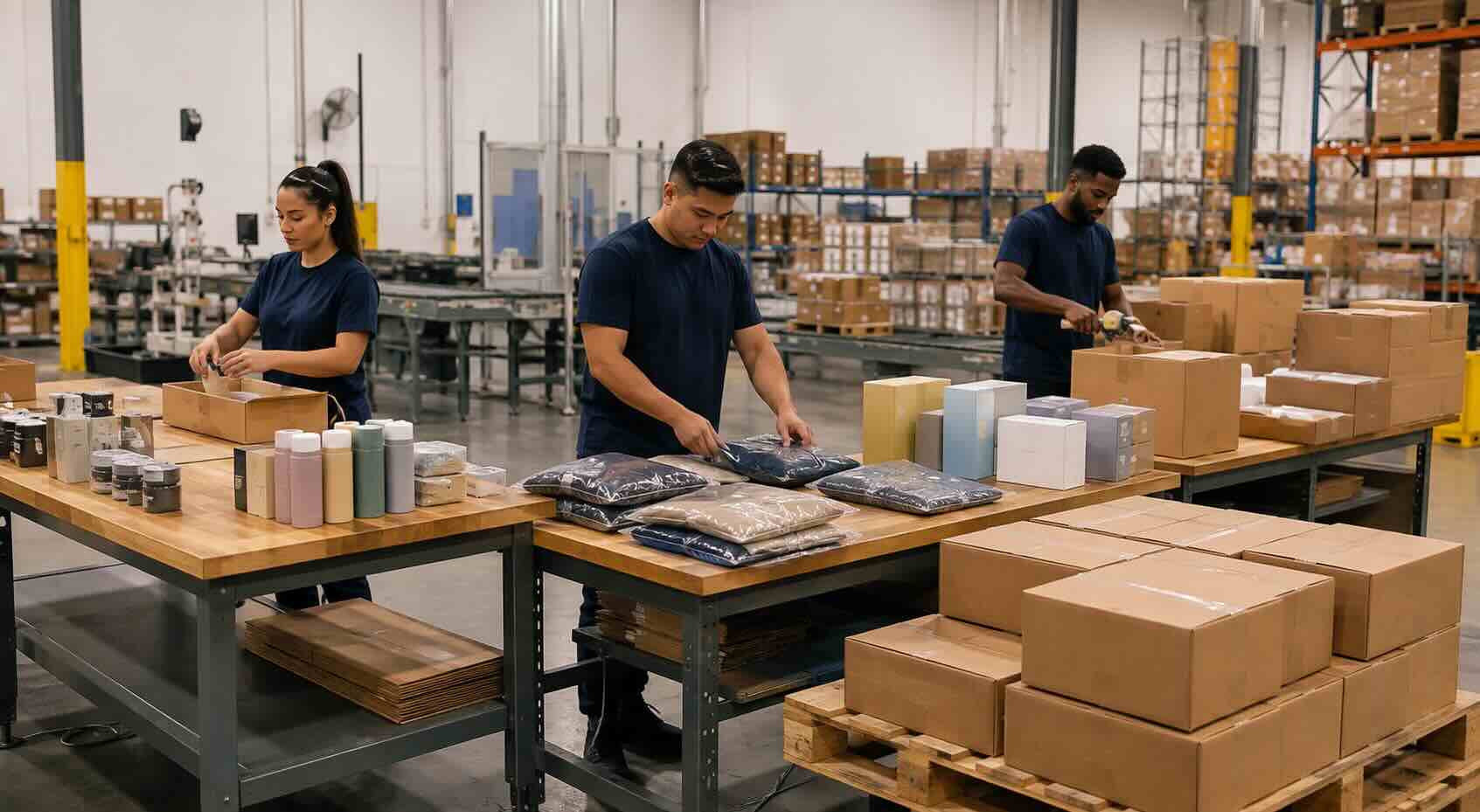
A prep provider like Warehousing Pro receives your inventory, inspects it, packages and labels it to Amazon’s exact specifications, and ships it to Amazon’s designated fulfillment centers on your behalf.
What Are Amazon’s FBA Prep Requirements?
At a minimum, most FBA shipments need:
- Receiving and visual inspection to catch damaged or incorrect product before it becomes your problem at the fulfillment center
- FNSKU labeling, Amazon’s barcode system that ties each unit to your seller account
- Poly bagging with suffocation warning labels, required for many product types
- Master carton repacking so cartons meet Amazon’s size, weight, and labeling standards
- Amazon shipment plan processing, making sure the shipment is set up correctly in Seller Central before it ships
Requirements vary by product category, so it’s worth confirming specifics for what you sell before your first shipment.
How Much Does FBA Prep Cost?
Pricing typically scales down as your volume goes up. As an example, here’s what tiered FBA prep pricing looks like:
| Monthly Volume | Price Per Unit |
|---|---|
| 100–500 units | $1.90/unit |
| 501–2,500 units | $1.35/unit |
| 2,501–10,000 units | $1.10/unit |
| 10,001+ units | Custom quote |
These rates generally include receiving, inspection, FNSKU labeling, poly bagging, master carton repacking, and shipment plan processing. Kitting/bundling and storage are usually billed separately since they vary so much by product.
If a quote doesn’t clearly break out what’s included, ask, hidden fees on accessorial work are one of the most common surprises sellers run into with prep providers.
Who Needs an FBA Prep Provider?
FBA prep needs look different depending on how you sell. A good provider should be able to support:
- Ecommerce and DTC brands shipping direct-to-consumer alongside FBA
- Wholesale and B2B sellers moving larger, less frequent shipments
- Subscription box brands with recurring kitting and bundling needs
- High-volume and growing sellers who need pricing and capacity that scale with them
If you’re running FBA alongside your own ecommerce fulfillment, look for a provider that can handle both out of the same facility, it keeps your inventory and workflows connected instead of split across multiple vendors.
Why Outsource FBA Prep Instead of Doing It Yourself
Handling prep in-house means renting or dedicating space, hiring and training staff, and staying current on Amazon’s labeling and packaging requirements as they change. For most sellers, that’s a lot of overhead for something that isn’t their core business.
Outsourcing to a dedicated amazon fba prep service typically means:
- Fewer receiving delays and compliance rejections at Amazon’s fulfillment centers
- Prep done by people who track Amazon’s current labeling, poly bagging, and palletizing requirements for a living
- Quality control before your product reaches Amazon, not after a rejection
- Scalability for peak season and Prime Day volume spikes without hiring seasonal staff
- One team handling receiving, prep, and shipment together instead of splitting the work in-house
Prep is an added line item in your fulfillment costs, but most sellers find it pays for itself through fewer rejections, faster receiving, and the time it frees up to focus on growing the business.
How to Choose an FBA Prep Company
A few things worth checking before you commit to a provider:
- Transparent pricing. You should be able to see exactly what’s included at each volume tier, with accessorial work (kitting, custom packaging, storage) broken out separately.
- Compliance track record. Ask how they handle Amazon’s labeling and packaging requirements as they change, and how they catch issues before a shipment goes out.
- Capacity to scale with you. A provider that works for 500 units a month should also have a plan for what happens when you hit 5,000, or 50,000.
- Support you can actually reach. Make sure there’s a real point of contact, not just a ticket queue, when something needs to move fast.
- Nationwide shipping capability, even if the warehouse itself is regional. You shouldn’t have to be local to work with a provider that’s a genuinely good fit.
Getting Started with FBA Prep
Getting set up with a prep provider is usually a short process: share your product details and expected volume, get a quote, and coordinate your first shipment into their facility. From there, ongoing shipments typically follow a repeatable process, receive, inspect, prep, and ship into Amazon’s network.